Case study
Assisted Purchase
A second way
to order
- Role
- End-to-end product design
- Team
- PM + Head of Product · Engineering · QA
- Scope
- Order flow · three assist routes
01
The problem
People arrived ready to book, and still dropped off: uncomfortable navigating the site, holding prescriptions they couldn't read, confused by test names, combinations and pricing. Help technically existed: callback, chat, prescription upload. But it lived outside the purchase journey, and almost nobody found it.
02
The reframe
“Users didn't want support. They wanted another way to place an order.”
So assistance stopped being a fallback and became a first-class purchase channel, built for the people who couldn't self-serve, invisible to the people who could. The brief we held ourselves to: convert the first group without adding a single step for the second.
03
The system
Three ways in: callback, WhatsApp chat, prescription upload, implemented on three surfaces, each at the exact moment uncertainty peaks. Contextual, never interruptive: users who could self-serve never saw a detour.
And on the other side of the call, agents got a console with the user's cart, search history, uploaded prescriptions and patient details, because the goal was closing an order, not resolving a ticket.
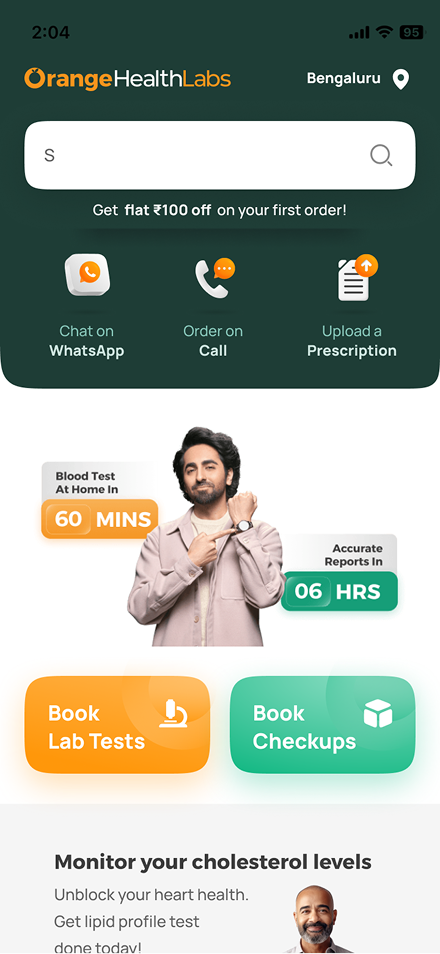
three assisted entries sit beside the regular booking paths, visible from the first screen.
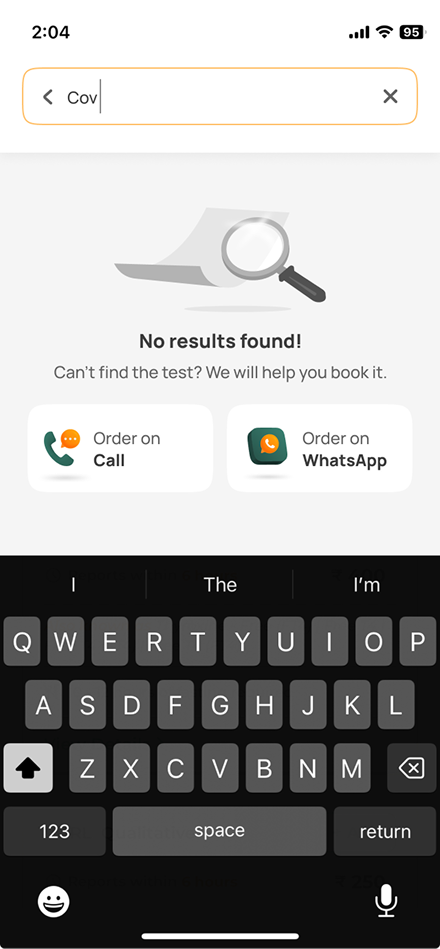
"no results" becomes "we will help you book it": order on call or whatsapp.
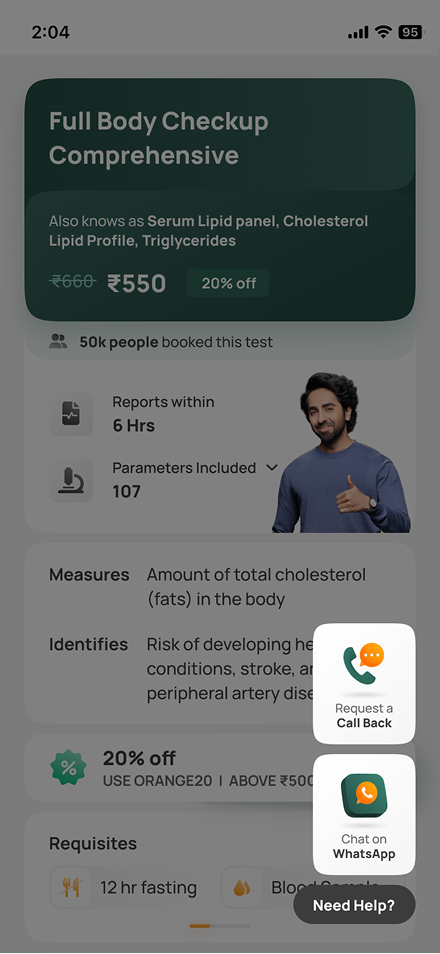
a floating "need help?" offers a callback or chat at the moment of doubt.
04
The impact
Callback leads grew ~70%, and 63% of them were contacted within ten minutes. The channels added incremental conversions, not cannibalized ones.